
First, how a live table actually works
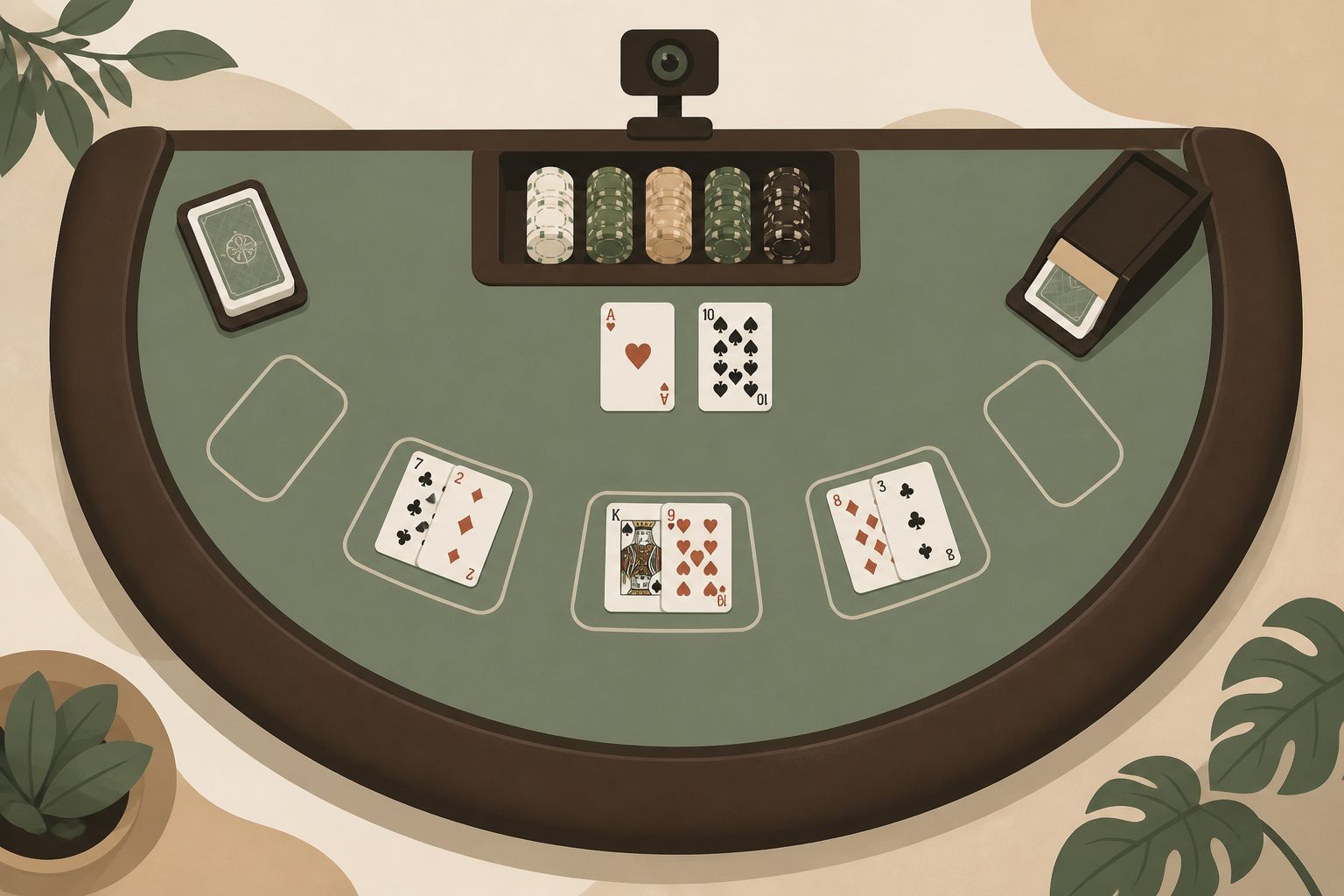
A live-dealer game is a real table in a real studio, filmed continuously and streamed to everyone seated at it online. The dealer handles physical cards or a physical wheel; your bets go in digitally through the interface, and optical recognition tells the software what the cards and wheel actually did. You can see the dealer. The dealer cannot see you — they see a screen with seat names and chat messages.
That last detail settles half of all etiquette questions on its own. Nobody at the table knows what you look like, where you are or how much you're worth. All they ever see of you is a username and what you type.
Chat: the short version
Treat the chat box like a friendly bar counter, not a private line. Say hello if you feel like it — dealers genuinely respond, and most are trained to keep light conversation going during shuffles. Keep messages short, because the dealer reads them aloud between hands and long paragraphs die mid-sentence.
Three things get people muted or removed at almost every studio:
- Abuse. Blaming the dealer for a losing hand is like blaming the postman for your bills. Dealers don't shuffle outcomes into existence, and moderators act on abuse quickly.
- Begging or "advice" spam. Asking other players for money, links or tips gets the same response everywhere: mute first, questions later.
- Anything personal. Don't ask dealers for their surnames, socials or locations. It puts them in an awkward position, and studio policy forbids them from answering anyway.
The decision timer is everyone's clock
In blackjack, each seat gets a fixed window — usually ten to fifteen seconds — to hit, stand or split. Miss it repeatedly and the software decides for you (typically standing, or the book move at some tables). Nobody minds the odd lapse; leaving six other players waiting every single hand while you make tea is the live-casino equivalent of holding up the supermarket queue. If you know you'll be distracted, roulette and game shows are kinder formats — bets close on a fixed cycle and no one waits on you personally.
Sitting out, leaving, and coming back
Leaving mid-shoe is completely fine — you're not abandoning anyone, and your seat frees up in seconds. There's no obligation to announce departures, though a quick "thanks, all" is a nice touch dealers notice. What regulars do quietly judge: joining a busy blackjack table just to sit and chat without betting, since seats at popular tables are scarce. Most lobbies mark tables with free seats, and "Infinite" or "unlimited seat" blackjack variants never make anyone wait for a chair.
On tipping
UK online studios don't run on tips the way Las Vegas floors do. Some interfaces include a small tip button, some don't; either way it's genuinely optional and nobody tracks who tipped. If a dealer made a long session pleasant, a tip or a kind word in chat both land — dealers mention regulars who are simply polite far more often than they mention money.
Losing gracefully is a skill
Every card was going to fall the way it fell regardless of who was sitting where — the shoe doesn't care that someone joined mid-round or that the player before you hit when the table "wanted" a stand. Blaming other players' decisions for your outcome is the oldest fallacy at the table. The players people enjoy sharing a table with are the ones whose chat reads the same after a losing hand as after a winning one. And if losing has stopped feeling okay, that's a signal worth hearing: our responsible gambling page lists tools that help before anything needs to be a problem.